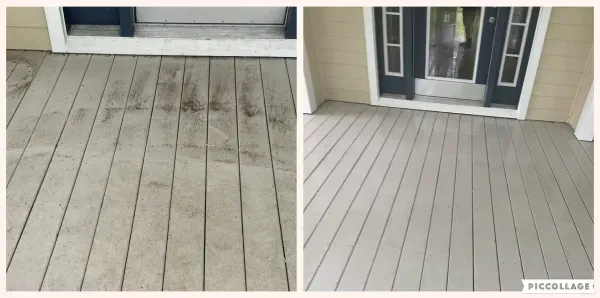
Pressure Washing in Orange Park: Older Homes Need a Gentler Method
Orange Park homes generally need exterior cleaning every 12 to 18 months, and older houses under mature tree cover usually fall at the shorter end. Because much of Orange Park was built decades ago, with aging brick mortar, older vinyl and painted stucco, soft washing at low pressure is the safer method. High pressure on those surfaces causes damage that cleaning was supposed to prevent.
What mature trees do to an Orange Park home
Orange Park has real tree cover. Live oaks, water oaks and pines that were planted or left standing forty and fifty years ago now form a canopy over whole streets. That canopy is the reason people love these neighborhoods, and it is also the reason the houses under it need washing more often than a new build in an open subdivision. Shade keeps walls and roofs from drying out. Falling debris feeds the growth. The two together create ideal conditions for algae and mildew.
You can usually see the pattern by walking the property. The sunny front of the house looks fine. The shaded side wall has a green tint. The north facing roof slope carries black streaks while the south slope looks close to new. Gutters fill with oak leaf litter and overflow during summer storms, running dirty water down the fascia and staining the wall underneath. That staining is the clearest sign that gutter cleaning and house washing belong on the same visit.
Not everything green on a wall is the same thing, and the difference changes the treatment. Algae is the most common. Mildew shows up in damp shaded corners. Actual mold is less common on exterior walls than most homeowners assume. Our guide on telling mold, mildew or algae on your house apart is a useful read before you decide anything is urgent, because most of what people find is ordinary and treatable.
Brick, vinyl and stucco each behave differently
Orange Park is a mix. There are 1970s and 1980s brick ranch homes, vinyl sided houses from the 1990s, stucco from the 2000s, and newer builds filling in around all of it. One cleaning approach does not fit that range. Brick looks tough but the mortar between the bricks is the weak point, and decades of Florida weather soften it. A high pressure tip held on aging mortar will cut it out of the joint. Once mortar is gone, water gets behind the wall.
Vinyl siding has a different failure mode. Pressure driven up under the lap of a panel pushes water into the wall cavity, where it has no fast way out. Older vinyl is also chalky and brittle from years of sun, so aggressive cleaning can crack or dull panels that were fine the day before. Painted stucco chips at the edges and around control joints. On any of these, the goal is a cleaning solution doing the work while the water does nothing but rinse.
Paint age matters as much as the material underneath it. A stucco or wood trimmed house that was last painted twelve years ago has chalky, thinned paint that gives up under pressure a fresh coat would shrug off. Caulk lines around windows and door frames dry out and shrink. Wood trim, soffits and fascia on an older Orange Park home are often the first thing to suffer from an aggressive wash, and they are also the most expensive part to put right afterward.
That is what soft washing means in practice, and it is the standard method on older homes for a reason. Low pressure, the right mix, enough dwell time, then a thorough rinse. The wall comes clean without the operator relying on force. If you want the mechanics of it, the comparison of soft washing versus pressure washing explains where each one belongs. Driveways and concrete can take real pressure. House walls on a forty year old home generally should not.
Roofs, driveways and the things that get skipped
Roof cleaning is where the stakes are highest on an older Orange Park home. Those black streaks are a living organism, not dirt, and they spread down the slope over time. High pressure on shingles blasts off the protective granules and typically voids the shingle warranty, which is a bad trade on a roof that may already have ten or fifteen years on it. Low pressure treatment kills the growth without touching the granules. The details are covered in our post on roof soft washing and shingle warranties.
Concrete driveways in Orange Park go green rather than black, and they do it fast under tree cover. A surface cleaner gives an even finish across the whole slab instead of the striped wand marks you get from a fan tip waved back and forth. Older concrete with hairline cracks and exposed aggregate needs the pressure dialed down and the cleaner doing more of the work. Rust stains from irrigation water and oak tannin staining both need specific treatments rather than more pressure.
The parts most often skipped are the ones people see every day without registering them. Front porch ceilings covered in spider webbing. The garage door apron. Fence panels along the property line that have gone gray and slick. Window exteriors that dull the light coming in. None of those take long, and adding them to an existing appointment costs far less than booking them separately later.
How often, and what a realistic schedule looks like
Twelve to eighteen months is the working range for most Orange Park homes. Under heavy canopy, plan on twelve. In an open yard with sun on most sides, eighteen is usually fine. Roofs run on a longer cycle than walls, often two to three years, though a roof that is heavily shaded and already streaking should not wait. Gutters under oaks need attention at least once a year and often twice. Our general guidance on how often to pressure wash in Florida goes deeper on the timing.
Waiting too long costs money rather than saving it. Algae holds moisture against paint and caulk. Debris packed in a gutter rots the fascia board behind it. Organic staining that sits on concrete for years soaks in and becomes permanent, so the slab never returns to its original color no matter how it is cleaned later. Regular cleaning at a sensible interval is maintenance. Waiting until the house looks bad turns it into a repair conversation.
H2O Pressure Washing serves Orange Park, Fleming Island, Mandarin and the surrounding Northeast Florida area, and we handle older homes with the low pressure methods those homes need. If you want an honest look at what your house actually requires, and a number before anyone starts, Request a quote or call (904) 506-7656.
Frequently asked questions
Is pressure washing safe on an older brick house?
High pressure is not. Aging mortar joints soften over decades and a concentrated tip can cut the mortar out, which lets water behind the wall. Older brick should be cleaned with a low pressure soft wash where the cleaning solution does the work instead of the water.
How often do Orange Park homes need washing?
Generally every 12 to 18 months. Homes under mature oak canopy usually need it closer to 12 months because the shade keeps walls damp and falling debris feeds algae growth. Homes with open sun on most sides often stretch to 18.
Can you clean vinyl siding without forcing water behind it?
Yes. The risk comes from driving pressure up under the lap of the panels. Soft washing applies cleaner at low pressure and rinses downward, so water is not pushed into the wall cavity. That is the standard approach on older or chalky vinyl.
Related reading
- Exterior Cleaning for St. Augustine Vacation Rentals
- Pressure Washing in Green Cove Springs, FL: Well Water, Wooded Lots, and Older Roofs
Get a free quote
H2O Pressure Washing serves Saint Johns and the wider St. Johns County area. For a free, fixed-price quote, tell us about your property or call (904) 506-7656.
