Mold, Mildew or Algae? What Is Actually Growing on Your House
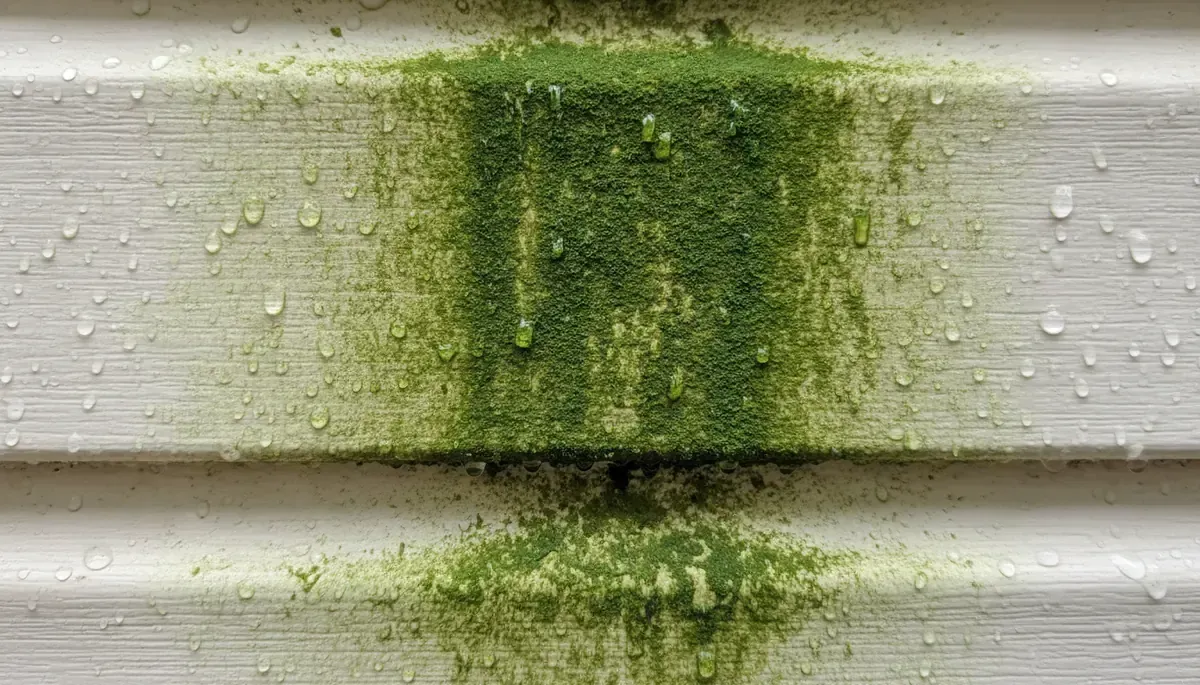
Green growth on siding and concrete is almost always algae. Black streaks running down a roof are gloeocapsa magma, a specific algae. Fuzzy grey or white patches in damp shaded spots are mildew, a surface mould. True structural mould is usually black or dark green, appears where water is getting in, and is the one worth investigating rather than just washing off.
How to tell them apart
Algae: green, sometimes reddish, flat against the surface, worst on the north side and anywhere shaded. On concrete it is slippery when wet. This is the great majority of what people call mould.
Roof algae: black streaks running downward, widening as they descend. A specific organism that feeds on limestone filler in shingles. Covered in detail in our post on black streaks on your roof.
Mildew: fuzzy or powdery, grey to white, in consistently damp shaded spots. Wipes away more readily than algae but returns quickly if the damp does not change.
Mould: darker, often black or very dark green, frequently with a musty smell, and usually appearing in one area rather than across a whole elevation.
Which ones matter
Algae and mildew on an exterior are mainly a maintenance and appearance issue. They hold moisture against the surface, which shortens the life of paint, wood and mortar, but they are not a health problem outdoors.
Mould in a concentrated patch is a different signal. It means water is sitting somewhere it should not, and washing the outside does nothing about the cause.
The tell is location. Growth spread evenly across a shaded wall is algae. Growth concentrated under a window, behind a gutter joint or at one corner suggests water getting in at that point, and the wash will only remove the evidence.
How each is removed
All three come off the same way on an exterior: low pressure and a cleaning solution with enough dwell time to kill the organism, then a controlled rinse.
What must not happen is high pressure on a soft surface. It removes the visible growth and damages what it is growing on, and on a shingle roof it strips the granules.
If we find growth that looks like a water intrusion rather than ordinary surface algae, we will tell you rather than wash over it. That is a repair question, not a cleaning one.
Frequently asked questions
Will bleach from the hardware store fix it?
It will remove some of the colour. At the wrong dilution it also damages landscaping, corrodes gutters and flashing, and is difficult to rinse properly. The concentration and the rinse are most of the job.
Why does it come back so fast?
Because most cleaning removes what is visible without killing the roots. A proper soft wash kills the organism, which is why it lasts two to three times longer.
Does it damage the house?
Over time, yes. Organic growth holds moisture against wood, paint and mortar, and constant damp is what turns a cleaning job into a repair job.
Related reading
- Window Cleaning in Florida: How Often and What Actually Causes the Haze
- Fall and Winter Exterior Checklist for Florida Homes
Get a free quote
H2O Pressure Washing serves Saint Johns and the wider St. Johns County area. For a free, fixed-price quote, tell us about your property or call (904) 506-7656.
