Pressure Washing in RiverTown: What River Air Does to a House
RiverTown homes generally need exterior cleaning more often than inland St. Johns County neighborhoods because the St. Johns River keeps humidity high and morning fog sits on siding, roofs and pavers for hours. Most RiverTown houses do well on a 12 to 18 month soft wash cycle, with pavers, lanais and screen enclosures cleaned on their own schedule.
Why RiverTown homes green up faster
RiverTown sits on the St. Johns River, and that location changes how quickly the outside of a house gets dirty. Moisture in the air does not burn off here the way it does a few miles inland. Fog rolls across the riverfront lots in the early morning and settles on siding, roof shingles and concrete. It often hangs on until mid morning. Algae needs three things to spread: moisture, shade and a surface to hold onto. Along the river, the moisture part is close to permanent.
Most homeowners notice it first on the north side of the house, the wall that never gets direct sun. Light green haze shows up on stucco or vinyl, usually low on the wall and around the hose bib. Fascia boards start to look gray. Soon after, the driveway edges darken and the walkway to the front door picks up a slick film. None of that is a defect in the house. It is what a warm, wet climate does to any surface that stays damp overnight.
Distance from the water matters more than people expect. A home backing directly to the river or to one of the ponds tends to show growth several months earlier than a home on an interior street with open sun on all four sides. If your lot sits low, backs to a preserve, or is shaded by the trees along the trail system, plan on cleaning closer to the 12 month mark. Homes on higher, sunnier lots often stretch to 18 months without looking neglected.
Walk the trail network and the amenity areas and you can see the same effect on a larger scale. Shaded sidewalk sections go green while the open stretches stay clean. Retaining walls near water hold a dark band along the base. Those community surfaces get cleaned on a schedule for a reason, and your house is subject to the same conditions on the same timeline. If the sidewalk in front of your home is greening, the north wall of the house is usually a few weeks behind it.
Newer homes, newer surfaces, different care
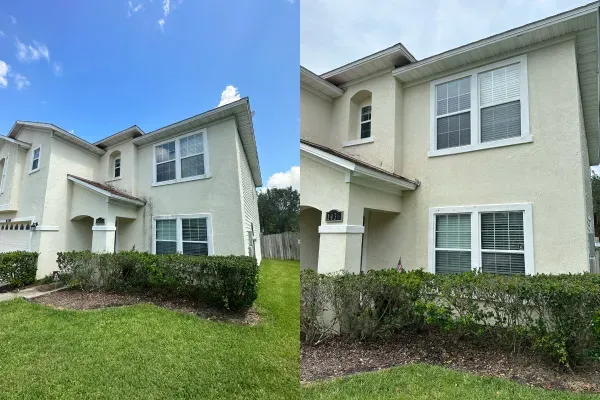
Much of RiverTown was built in the last fifteen years, so the exteriors here are fairly consistent. Fiber cement and stucco walls, architectural shingle roofs, paver driveways and screened lanais off the back. Those materials hold up well, but each one has a rule. Pavers hold moisture in the joints and grow algae in the sand lines. Screen enclosures collect a film that dulls the whole cage. Shingles stain from a bacteria that feeds on the limestone filler in the shingle itself.
Paver driveways are the surface most often damaged by the wrong approach. A narrow, high pressure tip blasts joint sand out of the seams and etches the face of the paver. Once the sand is gone, the pavers shift and weeds move in. The correct method is a surface cleaner at controlled pressure, then re-sanding the joints afterward. If your pavers already look faded, it is worth reading whether paver sealing is worth it before you commit to it, because sealing a dirty paver locks the dirt in.
Screened lanais and pool decks deserve their own visit. The screen mesh itself traps pollen, spider webbing and a gray film that cuts the view of the backyard. Aluminum framing streaks. Pool deck concrete gets slippery long before it looks dirty, which is the part that actually matters with kids in the house. We handle those areas with low pressure and a cleaning solution rather than force, and the full approach is covered in our guide to cleaning pool decks, lanais and screen enclosures.
Soft washing is the right method for river humidity
Pressure removes what is sitting on a surface. It does not kill what is growing in it. That distinction is the whole reason a house washed with pressure alone comes back green in a few months while a soft washed house stays clean much longer. Soft washing applies a cleaning solution at garden hose pressure, lets it break down the algae and mildew at the root, then rinses. The wall gets clean and the organism gets killed. If the difference is new to you, our breakdown of soft washing versus pressure washing lays it out plainly.
Roofs in RiverTown are almost always a soft wash job. The black streaking on a shingle roof is a living organism, and high pressure on shingles strips granules, voids most manufacturer warranties and can shorten the life of the roof by years. There is no version of that trade that makes sense. A properly mixed low pressure treatment kills the growth and the streaks fade out over the following weeks. Roof cleaning is also the single change that makes the biggest visual difference from the street.
Water use is worth mentioning because it comes up often. Soft washing uses less water than blasting a wall for an hour, and the rinse is directed away from beds and downspouts. Plants get pre wetted and rinsed afterward. Anyone working around your landscaping should be doing that as a matter of routine, not as an extra you have to ask for.
When to schedule in RiverTown
Late winter and early spring is the busiest window, and for good reason. Pollen season coats everything in yellow, and homeowners want the house clean before the pool opens and before family visits. If you want a specific week in March or April, book it in January or February. Fall is the quieter season and often the better value, since the growth from summer rain is at its peak and the weather is comfortable for a full exterior day.
A practical way to plan is to bundle. House soft wash, driveway and walkway, and the lanai in one visit costs less than three separate trips and leaves the property looking finished rather than patchy. Gutters are worth adding if the home sits under any tree cover, because clogged gutters overflow onto the fascia and stain the wall you just paid to clean. Nocatee homeowners face a similar mix of surfaces, and our notes on pressure washing in Nocatee cover the same bundling logic.
If your RiverTown home is starting to show green on the shaded walls, or the pavers have gone dull, a walkthrough and a written number takes very little time. We service RiverTown, Fruit Cove, Julington Creek, World Golf Village and the rest of St. Johns County. Request a quote or call (904) 506-7656.
Frequently asked questions
How often should I pressure wash my house in RiverTown?
Most RiverTown homes do well with a soft wash every 12 to 18 months. Homes backing to the river, a pond or a preserve tend to need it closer to 12 months because they stay damp longer each morning. Sunny interior lots can often go the full 18.
Will pressure washing damage my paver driveway?
It can, if the wrong equipment is used. A narrow high pressure tip strips the joint sand and etches the paver face. A surface cleaner at controlled pressure, followed by re-sanding the joints, cleans pavers without that damage.
Can you clean the inside of a screen enclosure?
Yes. Screen enclosures are cleaned with low pressure and a cleaning solution rather than force, which protects the mesh and the aluminum frame. Most homeowners have the screens, the frame and the pool deck done in the same visit.
Related reading
- Pressure Washing in Orange Park: Older Homes Need a Gentler Method
- Exterior Cleaning for St. Augustine Vacation Rentals
Get a free quote
H2O Pressure Washing serves Saint Johns and the wider St. Johns County area. For a free, fixed-price quote, tell us about your property or call (904) 506-7656.
