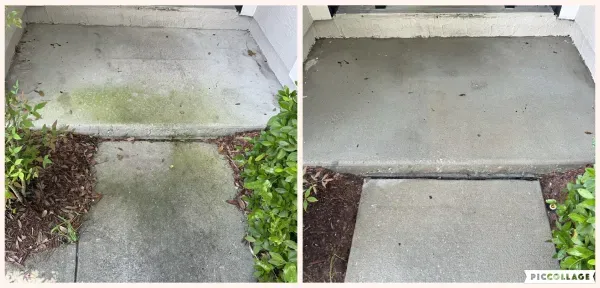
Why Florida Driveways Turn Green (and How to Fix It)
If your driveway, walkway or pool deck has gone green or grey, you are not looking at dirt. You are looking at something alive, and that is why scrubbing and rinsing never quite fixes it.
It is algae, and Florida is perfect for it
The green film on concrete is algae, often mixed with mildew and mould. It needs three things to thrive: moisture, shade and a porous surface to hold onto. Northeast Florida hands it all three almost year round.
Concrete is far more porous than it looks. Its surface is full of microscopic pits that trap water and organic debris. Add our humidity, afternoon storms and mild winters, and growth never really gets a hard reset.
Why it always comes back on the same spots
Notice it is worst under the oak, along the north edge, or where the sprinkler hits every morning? Those are the spots that stay damp longest. Sun and airflow dry a surface out and slow growth. Shade and constant moisture do the opposite.
Common repeat offenders around St. Johns County homes:
- The shaded strip of driveway under tree cover
- Pool decks and lanais that stay damp and get little direct sun
- North facing walkways and entryways
- Anywhere an irrigation head sprays concrete daily
- Low spots where water sits after a storm
The part people underestimate: it is genuinely slippery
Algae on wet concrete is slick. On a pool deck, a front walkway or the steps to a front door, that is a real fall risk, and it is worse for older visitors and kids. This is the reason we treat green concrete as a safety issue rather than just a cosmetic one.
Why a garden hose and a scrub brush do not fix it
Rinsing removes the top layer you can see. What it does not do is kill what is rooted in the pores of the concrete. That is why a hosed off driveway looks better for about two weeks and then goes green again, often faster than before.
Bleach poured straight onto concrete is not the answer either. It can damage surrounding landscaping, discolour some surfaces and runs off into places you do not want it.
What actually works
Proper concrete cleaning is a two part process. A cleaning solution is applied and given time to kill the growth at the root, then the surface is cleaned with a flat surface machine that delivers even pressure across the whole slab.
That even pressure matters. Cleaning a driveway with a handheld wand is how you get the striped, zebra striped look where you can see every pass. A surface cleaner produces one consistent finish.
We clean driveways, walkways, pool decks and pavers across St. Johns, Fruit Cove, Ponte Vedra and the surrounding areas. Free quotes at (904) 506-7656.
How to make it last longer
- Adjust sprinkler heads so they water the lawn, not the concrete
- Trim back branches that keep an area in permanent shade
- Clear leaves and organic debris rather than letting them sit and break down
- Plan on a yearly clean rather than waiting until it is visibly bad
None of that stops algae in a Florida climate. It does slow it down noticeably, which means the clean you paid for lasts longer.
What about sealing?
Sealing pavers and concrete after cleaning reduces how much moisture and debris the surface absorbs, which slows regrowth and makes future cleanings easier. It is worth considering for pavers in particular. The important part is that sealing goes on after a proper clean, never over existing growth.
- Green concrete is living algae, not dirt, so rinsing it off never lasts.
- Shade, moisture and porous concrete are what feed it.
- Wet algae is a genuine slip hazard, especially on pool decks and entryways.
- Cleaning solution plus a flat surface machine gives an even, lasting result.
Frequently asked questions
Will pressure alone remove algae from concrete?
It removes what you can see but leaves growth rooted in the pores of the concrete, so it returns quickly. A cleaning solution that kills the growth first is what makes the result last.
Is a green driveway actually dangerous?
When wet, yes. Algae is slick and causes falls, particularly on pool decks, steps and shaded entryways.
Can I just use bleach from the hardware store?
We do not recommend it. Undiluted bleach can harm landscaping, discolour some surfaces and run off where you do not want it. Professional solutions are mixed for the surface and rinsed properly.
How long before it comes back?
With a proper clean, most Northeast Florida driveways stay clear for about a year. Heavily shaded areas and spots hit by sprinklers regrow faster.
Do you clean pavers the same way?
The process is similar but pavers need more care, particularly around joint sand. Pavers are also the best candidates for sealing afterwards.
Free quotes across St. Johns, Clay and Duval counties. Call (904) 506-7656 or request a quote online.
