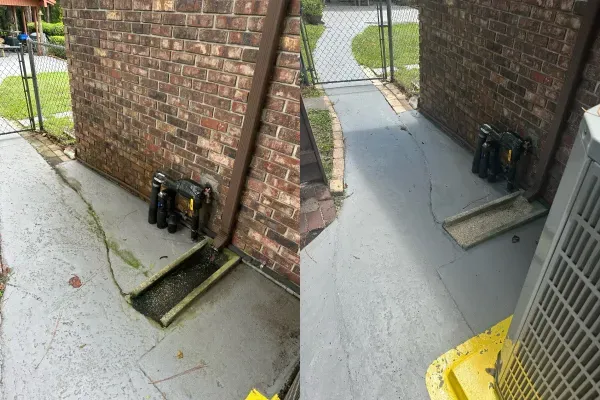
Keeping Your Fleming Island Home Mold-Free Year-Round
Fleming Island sits on the water, and that is lovely right up until you look at the north side of your house.
Why waterfront humidity is harder on a home
Proximity to the St. Johns River keeps ambient humidity high and slows how quickly surfaces dry after rain or overnight condensation. Mould, mildew and algae need moisture, and here they get it nearly every night for much of the year.
The practical result is that a Fleming Island home grows organic film noticeably faster than an identical house a few miles inland with more sun and airflow.
Where it shows up first
- The north facing wall, which gets the least sun and stays damp longest
- Soffits and the underside of eaves, where air barely moves
- Screen enclosures and lanais, which are shaded and permanently humid
- Concrete and pavers under tree cover
- Fences, especially the side facing away from the sun
If one elevation of your house looks noticeably worse than the others, that is normal here and it is the shade doing it.
Mould, mildew and algae are not the same thing
Algae is the green film, usually on concrete and siding. Mildew is the flat grey and black speckling. Mould is the fuzzier growth that turns up where moisture is trapped rather than merely present. They need slightly different handling, which is one reason a one method contractor tends to leave some of it behind.
Why pressure is the wrong tool here
Siding, soffits and stucco should be cleaned with soft washing. High pressure forces water up behind siding and into the wall assembly, which turns a surface problem into a hidden one. Given that the underlying issue here is already too much moisture, driving more water into the structure is the last thing anyone should be doing.
We work throughout Fleming Island and neighbouring Orange Park, Green Cove Springs and Middleburg. Free quotes at (904) 506-7656.
A realistic maintenance rhythm
Most Fleming Island homes do well on a yearly whole house clean, with the shaded elevations and the screen enclosure sometimes needing attention in between. Waiting until growth is obvious means it has had time to root into porous surfaces, which makes it harder to remove and shortens how long the clean lasts.
What you can do between visits
- Adjust irrigation so sprinklers water the lawn rather than the house and concrete
- Trim back anything holding a wall in permanent shade
- Keep gutters clear so water leaves the roofline properly
- Clear leaves off flat surfaces rather than letting them sit and break down
None of it stops growth in this climate. All of it slows growth down, which means the cleaning you paid for lasts longer.
- Waterfront humidity keeps surfaces damp overnight, which is what growth needs.
- North facing walls, soffits and enclosures show it first.
- Siding and stucco need soft washing, not pressure, especially in a damp climate.
- Yearly is the realistic rhythm, with shaded elevations sometimes needing more.
Frequently asked questions
Why is only one side of my house dirty?
Shade. The elevation that gets least sun stays damp longest, and that is exactly what mould and algae need.
Is the growth on my house dangerous?
Mostly it is a surface and appearance problem, though anything holding moisture against a wall is worth removing. Growth on walkways is a genuine slip risk when wet.
How often should a Fleming Island home be washed?
About once a year for the whole house, with shaded sides and screen enclosures sometimes needing attention in between.
Will cleaning damage my landscaping?
No when it is done properly. Plants are pre wetted and protected before work starts and rinsed afterwards.
Can you clean the screen enclosure at the same time?
Yes, and it is cheaper done in the same visit than booked separately.
Free quotes across St. Johns, Clay and Duval counties. Call (904) 506-7656 or request a quote online.
